
Criminal Cases in the Eureka County Courts
Eureka County criminal court cases begin at the level that has power over the charge and stage of the case. Eureka Justice Court hears misdemeanors and traffic matters, handles warrants within its role, conducts initial appearances, and manages preliminary felony work. A felony or gross misdemeanor that advances is filed in the Seventh Judicial District Court. That court hears the higher criminal case and keeps its own record through judgment, sentence, and any appeal activity noted in the file.
The elected Clerk-Recorder is clerk of the District Court and maintains its records at 10 South Main Street. Justice Court maintains the dockets for its Eureka and Beowawe departments. No incorporated municipality in Eureka County runs a separate municipal court, so a search should not be sent to a city clerk. The court name and department on a paper are key clues because one prosecution can produce a Justice Court case followed by a distinct District Court filing.
Eureka County Criminal Court Routes
The county's Seventh Judicial District Court page identifies the higher trial court and its Eureka calendar.
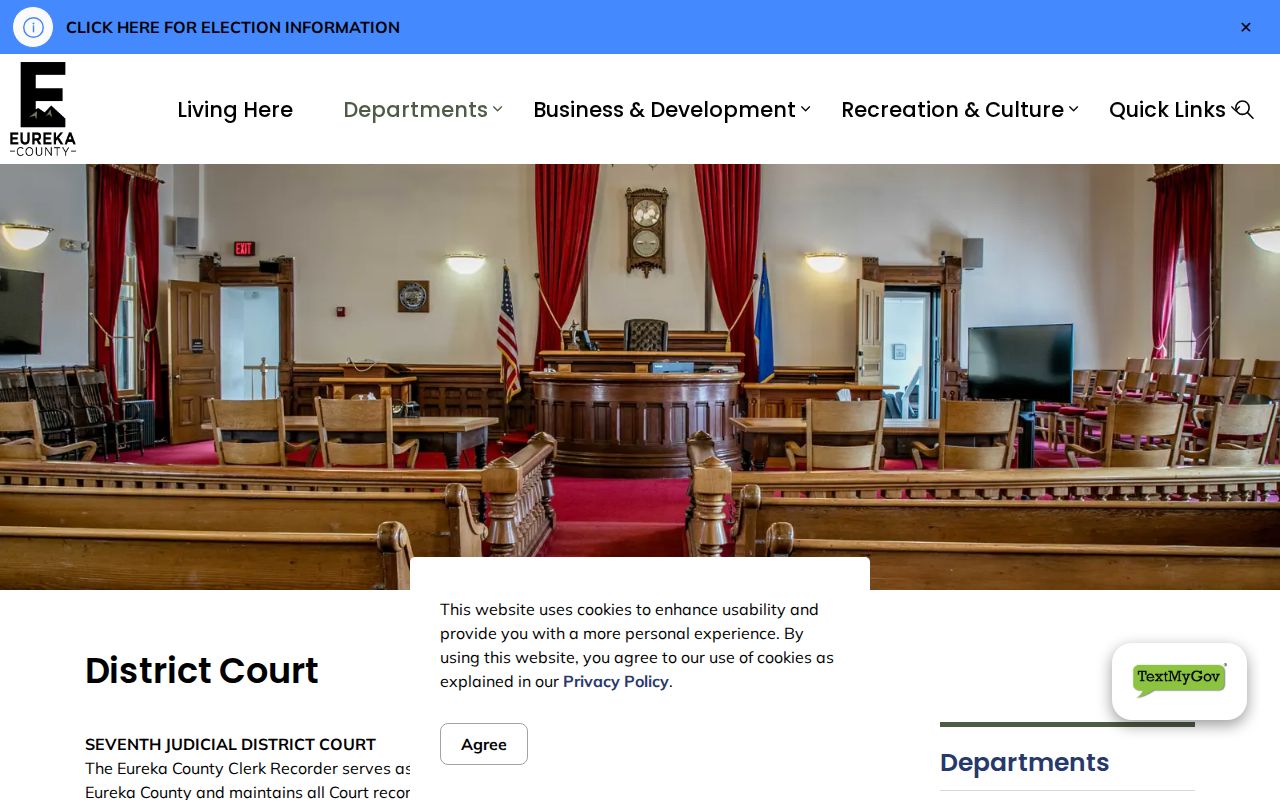
The captured page points searchers to the local court rather than a general Nevada trial-court database. District Court sits at the historic courthouse and handles felonies, gross misdemeanors, and appeals within its jurisdiction. Regular Eureka court days are the first and third Fridays, but the clerk should confirm a particular hearing before travel.
The official Justice Court page describes both limited-jurisdiction departments.
That division matters when locating early case records. The Eureka Department serves the county seat from 701 South Main Street, while the Beowawe Department uses a courtroom in Crescent Valley. Both use the unified clerk phone, 775-237-5540, and email, EuJCInfo@eurekacountynv.gov.
How to Search Case Records
Eureka County has no public online trial-court search and no published index range. The practical search is clerk-assisted by phone, email where offered, mail, or a counter visit. A case number is the strongest locator. If it is unknown, give the full legal name, an approximate filing year, and the likely court department. Ask for the docket first. Its dated entries help identify the complaint, information, judgment, minute order, or sentence that should be requested next.
- Choose Justice Court for a misdemeanor, traffic case, initial appearance, or felony preliminary matter. Choose District Court for a filed felony or gross-misdemeanor prosecution.
- Contact the clerk with the full name and case number if known. Add the approximate year and Eureka or Beowawe department to narrow a manual search.
- Ask whether the file is open, archived, sealed, or available for supervised inspection. A missing public result does not prove that no case exists.
- Request the docket, then note the dates and titles of the filings that answer the question. Police investigative material must be requested separately from the arresting agency.
- Ask for plain or certified copies, the current cost, delivery choices, and payment instructions before ordering. Eureka County publishes no local court copy-fee schedule.
| Field Label | Type | Required | Notes |
|---|---|---|---|
| Full legal name | Spoken or written text | Functionally yes | Include a middle name or aliases when checking your own record |
| Case number | Text | No | Best locator when known |
| Approximate year or date | Date or year | No | Narrows the clerk's manual search |
| Court department | Choice | No | District, Justice-Eureka, or Justice-Beowawe |
| Record requested | Text | Yes for copies | Docket, complaint, judgment, minute order, or certified copy |
These are details supplied to a clerk, not fields in a web form. No local wildcard rules, result caps, refresh schedule, download price, or public date coverage has been posted. A direct clerk answer is more reliable than assuming an online statewide search includes Eureka County criminal case records.
Eureka County Case Search Fallbacks
Nevada does not offer one free statewide public search for local trial cases. The Nevada appellate search covers Supreme Court and Court of Appeals matters, not the full Eureka Justice Court or District Court trial file. The official appellate case search is useful only after an appeal reaches that level.
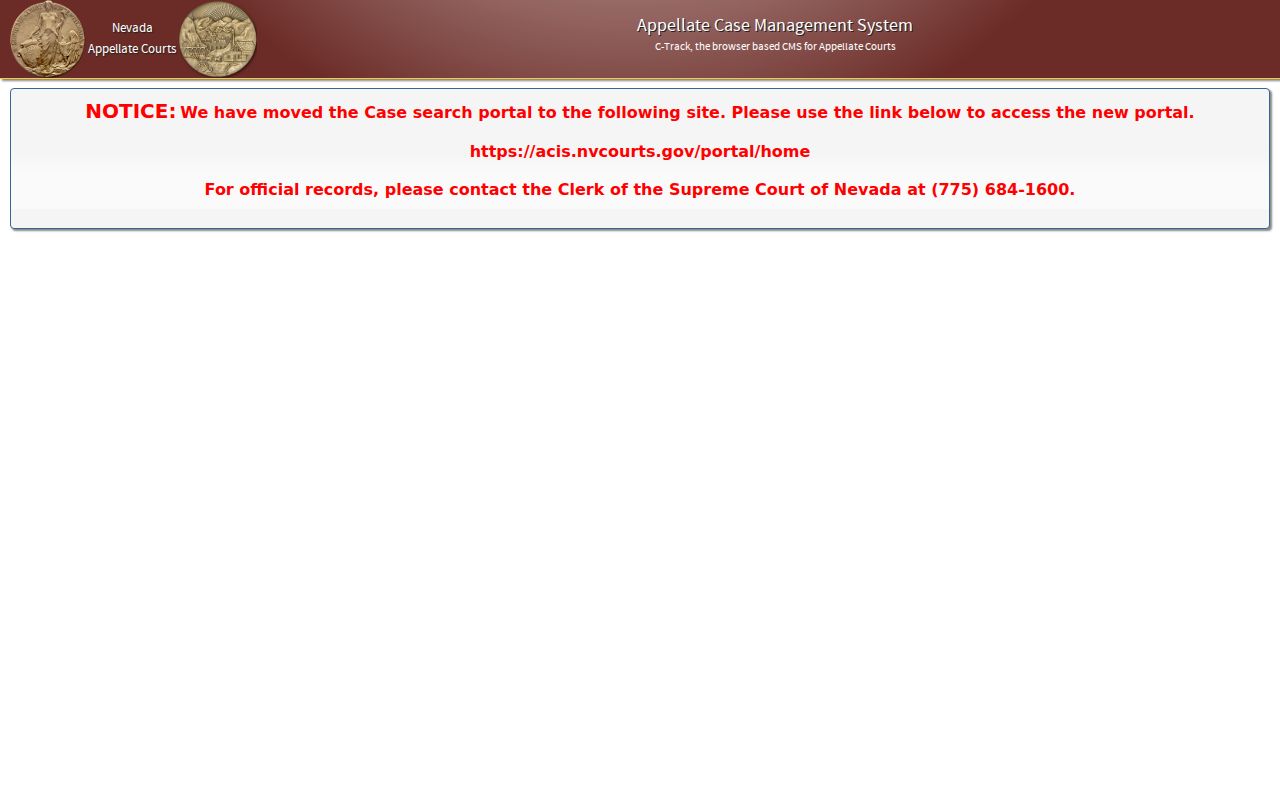
The image marks the state appellate layer, not a substitute for the county clerk. For a local trial file, call the District Court Clerk-Recorder at 775-237-5263 or use the Justice Court phone and email. Mail for the District Court goes to P.O. Box 540, Eureka, NV 89316. Justice Court uses P.O. Box 496, Eureka, NV 89316.
If the clerk finds a case but it is not open for normal review, ask whether it is archived, sealed, or limited to supervised inspection. Request the legal basis for a denied public document and narrow the request when only part of a filing is protected.
What the Case File Shows
A Eureka County criminal case file centers on one prosecution. It can identify the court, department, filing date, case status, attorneys, charges, statutes, hearings, motions, plea or verdict, judgment, and sentence. It may also show warrants or summonses, release orders, probation, fines, restitution, an appeal reference, and whether a document is available. The docket is the best first document because it places those events in order.
| Case Number & Court | Locates the prosecution and shows whether Justice Court or District Court holds it. |
|---|---|
| Charging Document | The complaint, information, or indictment states the filed accusations and cited statutes. |
| Docket Entries | A dated register of filings, hearings, orders, pleas, and other case events. |
| Hearing Dates | Lists the type, date, and judicial officer when shown in the public file. |
| Disposition & Judgment | Shows how each filed charge ended, such as conviction, dismissal, or acquittal. |
| Sentence & Conditions | Records custody, probation, financial terms, restitution, and other orders when imposed. |
A court file is not the same as an RCCD rap sheet, booking entry, or sheriff report. The court record shows what prosecutors filed and what the judge decided. Sensitive identifiers, victim or minor information, and sealed material can be withheld. For the event narrative or evidence references, request the releasable report from the agency that created it.
Eureka County Criminal Docket Terms
The caption alone rarely answers what happened. Read each charge through its final entry, since a complaint may be amended and separate counts can end in different ways. A filed charge is an accusation. A conviction requires a judgment of guilt after a plea or trial, while dismissal and acquittal describe different non-conviction outcomes.
- Complaint
- The initial filed accusation, commonly used in Justice Court.
- Information
- A prosecutor-filed charging document used where Nevada procedure allows it.
- Indictment
- A grand-jury accusation that begins a felony prosecution.
- Disposition
- The outcome of a charge or case, which should be read count by count.
- Minute order
- A court entry recording a hearing action or ruling; the exact effect depends on its text.
The Eureka County District Attorney page explains the prosecutor's county role.
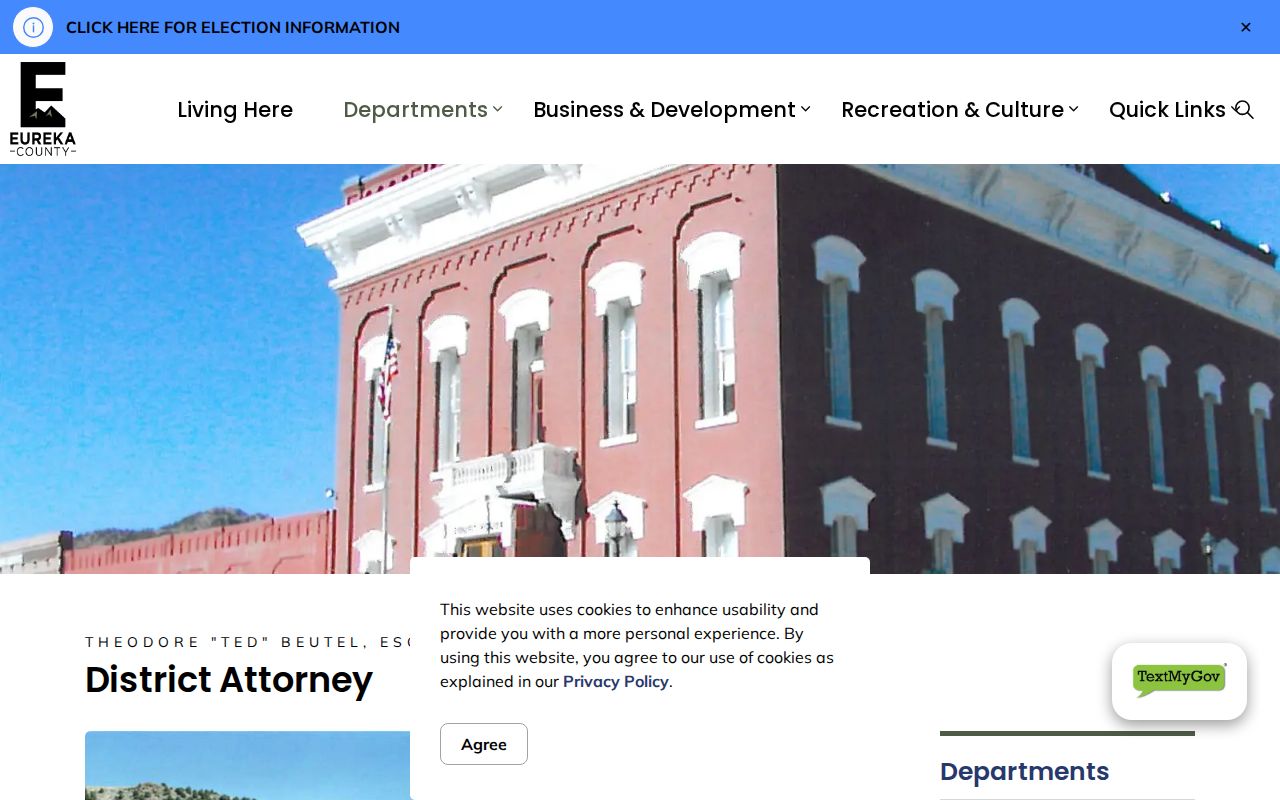
The image helps place the charging decision in context. The District Attorney reviews law-enforcement reports and decides what to prosecute, but the court clerk remains the custodian for the filed docket and judgment.
Stages of a Criminal Case
After an arrest or citation, Justice Court may address probable cause, release, counsel, and the early complaint. The District Attorney then reviews the agency report. Misdemeanors stay in Justice Court when within its jurisdiction. A felony or gross misdemeanor may move through a preliminary hearing or waiver before a charging paper is filed in District Court. Arraignment states the charge and takes a plea. Discovery, motions, negotiation, trial or plea, judgment, sentencing, and appeal each create their own docket entries.
Case flow: Charges Filed → Arraignment → Pretrial → Plea or Trial → Disposition → Sentencing
No fixed Eureka County timeline is published for each stage. Calendar dates depend on the charge, filings, hearings, and court orders. Use the docket for the actual sequence rather than estimating an outcome from an arrest date.
Eureka County Beowawe Court Calendar
Northern Eureka County has a local hearing point, but it is not a municipal court. The Justice Court's Beowawe Department courtroom is inside the Crescent Valley Justice Facility at 5041 Tenabo Avenue. The official schedule generally places court there on the third Thursday from 10:00 a.m. to 3:00 p.m., subject to the docket. The department name can mislead a searcher because the physical courtroom address is in Crescent Valley.
The county's Crescent Valley facility page shows the courtroom and Sheriff substation arrangement.
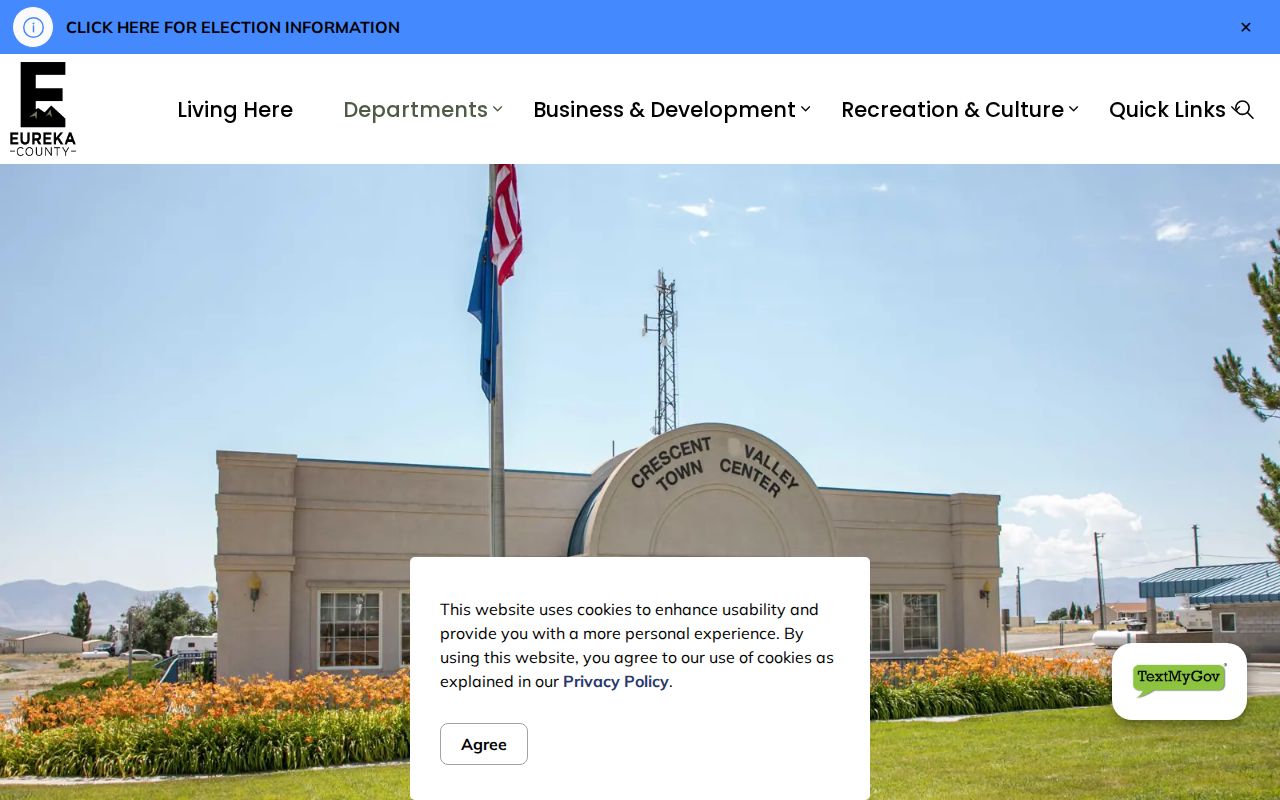
The captured facility page confirms why requests still go through the unified Eureka Justice Court clerk. Call 775-237-5540 to confirm the calendar and ask for the docket. Do not send a request to a Beowawe city or municipal clerk, since neither exists.
Access & Restrictions
Nevada court records are presumptively public, but statutes and court orders can require sealing or redaction. The Nevada rules for sealing and redacting court records set the general court-access framework, while Chapter 179 governs criminal record sealing and Chapter 62H restricts juvenile records.
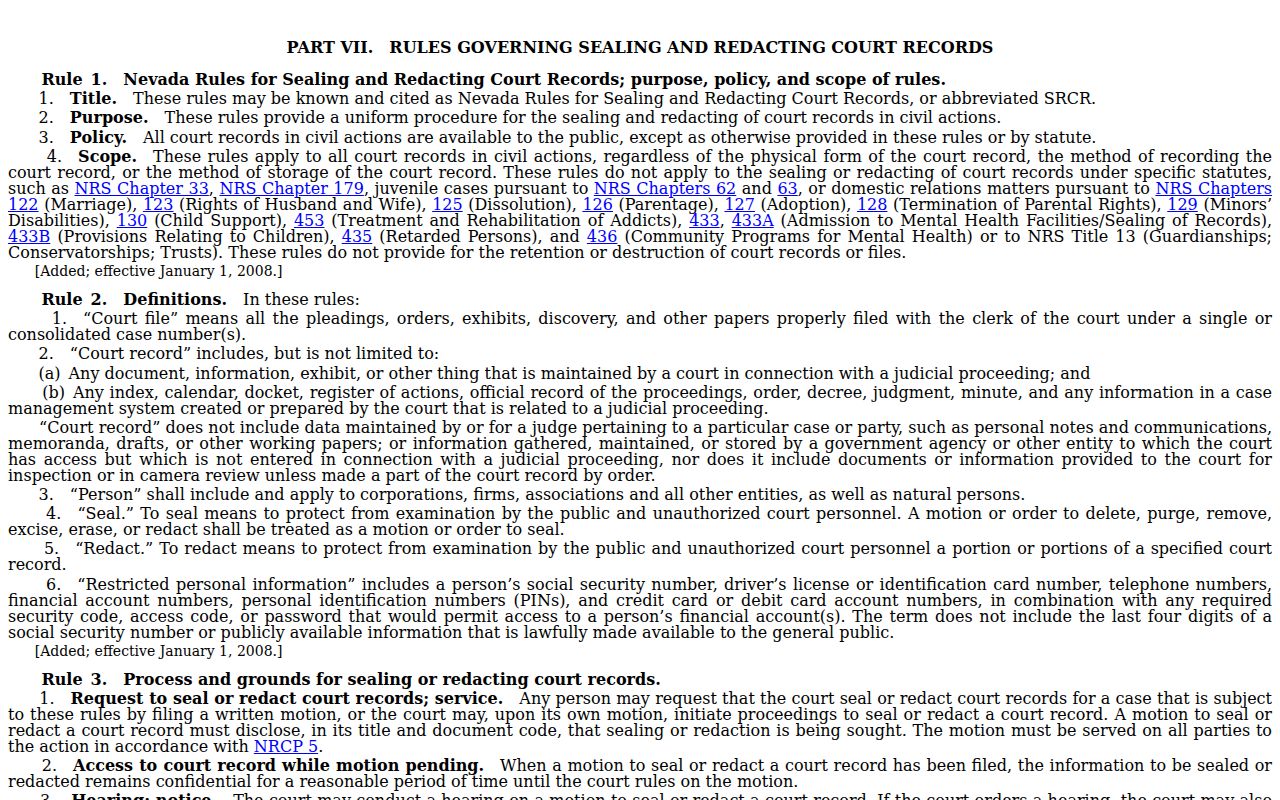
The rules shown in the source explain why a public docket may omit a protected filing or identifier. Social Security numbers, victim and minor details, confidential investigative material, and sealed records do not become open merely because other parts of a case are public. A clerk can explain the access status but cannot replace legal advice.
Eureka County Court Copy Access
A dated Eureka County office-hours notice moved public counters to a four-day schedule for 2026. The Clerk-Recorder, District Attorney, and Justice Court are scheduled Monday through Thursday, 7:00 a.m. to 5:30 p.m., with a 12:30 to 1:00 p.m. lunch closure and Friday closure. Some department pages still show older hours, so call before a long trip. District Court regular court days falling on Fridays do not mean the records counter follows an ordinary Friday schedule.
Copy and certification prices are not published in the official Eureka County sources. Tell the clerk whether a plain copy, certified copy, or supervised inspection is needed, then request a quote and payment steps. The same applies to archived material. For court documents, use the court custodian rather than a general Nevada Public Records Act request to the Sheriff.
Note: Requesting the docket first can limit copy costs and reveal which filed document contains the needed Eureka County criminal case outcome.